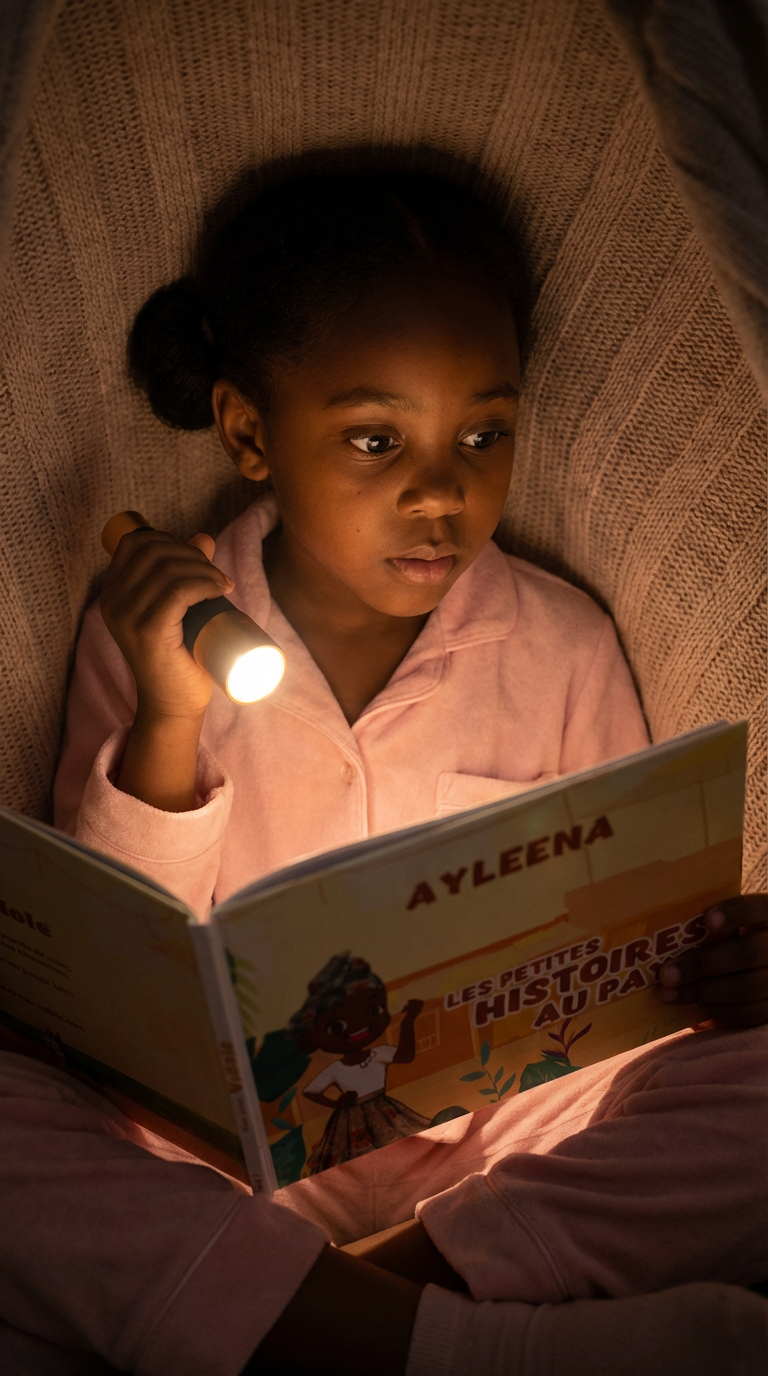
“If you never see your reflection in the books you read, you learn to make yourself small, to fade away. »Rudine Sims Bishop, specialist in children's literature
For a long time, children's books offered a limited vision of the world. A standardized vision, sometimes very far from the real diversity of children. Today, representation is no longer a detail: it is a human, educational and identity issue.
1. To see yourself is to exist
When a child recognizes himself in a character, he feels legitimate. It's not just a story that he likes: it's a story where he belongs. This sends him a fundamental message:your life is worth telling.
Even today, too many children grow up without ever seeing themselves in the books we read to them. And it leaves traces.
2. Diversity = wealth for all children
A children's book is not just a mirror. It is also a window: it opens onto other lives, other cultures, other realities. Showing different faces and cultures means offering all children a fairer vision of the world.
And the more naturally and authentically this diversity is presented, the more evident it becomes. It ceases to be an exception and becomes simply... life.
3. Representation builds empathy
Talking about representation does not mean addressing only certain children. A child can learn a lot by discovering a hero who resembles him but also a hero who is different from him. Both are necessary.
Discovering heroes who look like us gives confidence. Discovering different heroes teaches you to understand others. Representation concerns everyone.
4. True stories, universal emotions
At Vidolé, our stories don’t seek to tick boxes. They tell scenes of life anchored in everyday Afro-Caribbean life, but carrying values accessible to all: family, friendship, curiosity, trust, tenderness.
What matters is the truth of the stories, the warmth of the tone, the respect for origins, whether known or yet to be discovered.
5. A powerful and discreet educational tool
A well-designed book can deconstruct a stereotype, awaken empathy, open a discussion — without ever forcing the message. Just show, normalize, inspire.
A child who grows up with diverse books is better prepared to live with others, to understand them and to understand himself.
In conclusion
Representing all children in children's literature is not a luxury. It's a basic need. Every child deserves to see themselves in a story. And every child deserves to discover the stories of others too.
At Vidolé Books, we believe in children's literature that is open, joyful, grounded and sincere. Stories that reflect the world we want to build.
📖Want to give your child a book where he or she is the hero?